Friday, December 10, 2021

Wednesday, December 08, 2021

Christmas in Tudor England


I always love the research that goes into a making a historical novel, and so often I don't get to share quite as much of it as I would like!  (Yes, serious research nerd here, lol!)  So I'm going to be giving some "behind the book" glimpses here, starting with
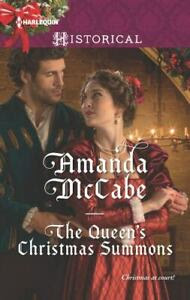
The Queen's Christmas Summons, which set a lavish Court Christmas in the aftermath of the Spanish Armada...


The Spanish Armada (Grande y Felicisima Armada, “great and most fortunate navy”) was one of the most dramatic episodes of the reign of Elizabeth I, and one of her defining moments.  If it had succeeded, the future of England would have been very different indeed, but luckily, weather, Spanish underpreparedness, and the skill of the English navy were on the queen's side.  The mission to overthrow Elizabeth, re-establish Catholicism in England, and stop English interference in the Spanish Low Countries, was thwarted.

King Philip began preparing his invasion force as early as 1584, with big plans for his fleet to meet up with the Duke of Parma in the Low Countries, ferry his armies to England, and invade. His first choice as commander was the experienced Marquis of Santa Cruz, but when Santa Cruz died Philip ordered the Duke of Medina Sedonia to take command of the fleet. The Duke was an experienced warrior - on land. He had no naval background, and no interest in leading the Armada, as the invasion fleet came to be called. He begged to be dismissed, but Philip ignored the request, as well as many other good pieces of advice about adequate supplies and modernizing his ships. 


After many delays, the Armada set sail from Lisbon in April 1588. The fleet numbered over 130 ships, making it by far the greatest naval fleet of its age. According to Spanish records, 30,493 men sailed with the Armada, the vast majority of them soldiers. A closer look, however, reveals that this "Invincible Armada" was not quite so well armed as it might seem.   Many of the Spanish vessels were converted merchant ships, better suited to carrying cargo than engaging in warfare at sea. They were broad and heavy, and could not maneuver quickly under sail.  The English navy, recently modernized under the watch of Drake and Hawkins, was made up of sleek, fast ships, pared down and maneuverable.  Naval tactics were evolving; it was still common for ships to come alongside each other and allow fighting men to engage in hand to hand combat. Advances in artillery were only beginning to allow for more complex strategies and confrontations at sea. At this stage the English were far more adept at artillery and naval tactics than the Spanish, who were regarded as the best soldiers in Europe.

The Spanish plans called for the fleet to sail up the English Channel and rendezvous off Dover with the Duke of Parma, who headed the Spanish forces in the Netherlands. This in itself presented huge problems. Communications were slow, and the logistical problems of a rendezvous at sea were immense.  Perhaps worst of all the problems faced by the Armada was Philip himself. The king insisted on controlling the details of the Armada's mission. He issued a steady stream of commands from his palace of the Escorial, yet he seldom met with his commanders, and never allowed his experienced military leaders to evolve their own tactics. He did not listen to advice, which was a shame, for Philip had little military training and a poor grasp of naval matters. He firmly believed that God guided him, and that therefore his mission would succeed. 

A series of signal beacons atop hills along the English and Welsh coasts were manned. When the Spanish ships were at last sighted of The Lizard on July 19, 1588, the beacons were lit, speeding the news throughout the realm. The English ships slipped out of their harbor at Plymouth and, under cover of darkness, managed to get behind the Spanish fleet.  The Spanish sailed up the Channel in a crescent formation, with the troop transports in the center. When the Spanish finally reached Calais, they were met by a collection of English vessels under the command of Howard. Each fleet numbered about 60 warships, but the advantage of artillery and maneuverability was with the English. 


Under cover of darkness the English set fireships adrift, using the tide to carry the blazing vessels into the massed Spanish fleet. Although the Spanish were prepared for this tactic and quickly slipped anchor, there were some losses and inevitable confusion.   On Monday, July 29, the two fleets met in battle off Gravelines. The English emerged victorious, although the Spanish losses were not great; only three ships were reported sunk, one captured, and four more ran aground. Nevertheless, the Duke of Medina Sedonia determined that the Armada must return to Spain. The English blocked the Channel, so the only route open was north around the tip of Scotland, and down the coast of Ireland. Storms scattered the Spanish ships, resulting in heavy losses. By the time the tattered Armada regained Spain, it had lost half its ships and three-quarters of its men, leaving a fascinating trove of maritime archaeological sites along the Irish coast (and myths of dark-eyed children born to Irish women and rescued Spanish sailors!  In reality, most of them met fates far more grim and sad).


In England the victory was greeted as a sign of divine approval for the Protestant cause. The storms that scattered the Armada were seen as intervention by God. Services of thanks were held throughout the country, and a commemorative medal struck, with the words, "God blew and they were scattered" inscribed on it.


If you'd like to read more about this fascinating and tragic event, here are a few sources I liked:

  • Robert Milne-Tyne, Armada!, 1988

  • Ken Douglas, The Downfall of the Spanish Armada in Ireland, 2009

  • Neil Hanson, The Confident Hope of a Miracle: The True History of the Spanish Armada, 2003

  • Laurence Flanagan, Ireland's Armada Legacy, 1988

  • James Hardiman, The History of the Town and Country of Galway, 1820

  • Colin Martin, Shipwrecks of the Spanish Armada, 2001

  • Garrett Mattingly, The Armada, 1959

Saturday, May 22, 2021

Cocktail of the Weekend


 Cocktail of the Weeekend--The Hemingway Daiquiri


Fun Weekend Links

 When "getting  back to normal" can feel terrifying

A lost Italian village emerges after 70 years underwater

Hidden inscriptions discovered in Anne Bolyen's Prayer Book

Shakespeare's Globe Reopens!

Princess Beatrice is expecting her first baby!  Congratulations

Brooches are making a style comeback, yay!

Lemon cocktails perfect for Memorial Day

The Mad Beach Party of 1923

Houses That Were Once Home to the Mitford Sisters

How To Be A Victorian Debutante


One of the fun things I researched for His Unlikely Duchess (and for “The Dollar Duchesses” series in general!) was the process of being an “official” debutante at the royal court of the nineteenth century. It was a long process, starting with getting approved, curtsying classes, multiple visits to dressmakers, hairdressers, and florists—and making sure you didn’t embarrass yourself in front of the queen. (As Lily would certainly never do!!!)

During Victoria’s reign, the Court Drawing Rooms were held in Buckingham Palace at four stated periods every year–two before Easter and two after. Levées, hosted by the Prince of Wales for the presentation of gentlemen, were held at intervals during the like season in St. James’s Palace. Though of lessening distinction as the Victorian period wore on, the delicious prospect of being presented to the Queen or Prince of Wales continued to be a beacon to ambitious social climbers.

When the date of a drawing room was announced, letters poured into the Lord Chamberlain, suggesting names of ladies for presentation. Everyone who had kissed the Queen’s hand was able to nominate another for presentation. But it wasn’t guaranteed that any name submitted was accepted. The list underwent careful scrutiny by both the Lord Chamberlain and the Queen, Her Majesty only receiving those who “wore the white flower of a blameless life.”

There were only three qualifications for admittance to the throne room:

    1. The lady wishing to be presented should be of good moral and social character.

    2. Presentation had to be made by someone who had already been presented.

    3. The status of the actual presentee. The most obvious candidates, the wives and daughters of the aristocracy, had the privilege of being kissed by Queen Victoria (though no kisses were received if the Princess of Wales were acting as stand-in, and the practice was dropped entirely in the Edwardian era), then came the ranks of those candidates whose presentation would be sealed by the action of kissing the Queen’s hand. These included the daughters and wives of the country gentry and Town gentry, of the clergy, of naval and military officers, of professional men such as physicians and barristers, of merchants, bankers and members of the Stock Exchange, and “persons engaged in commerce on a large scale.”

Summonses were sent out three weeks in advance, allowing ample time for the excited debutante or newly married lady, to practice the complicated court curtsy and order the regulated costume demanded for presentation, as laid out, via the Lord Chamberlain’s Office, in Lady Colin Campbell’s Manners and Rules of Good Society, 1911 edition:


Full Court Dress: low bodice, short sleeves, and train to dress not less than three yards in length from the shoulders. Whether the train is cut round or square is a matter of inclination or fashion. The width at the end should be 54 inches. It is also imperative that a presentation dress should be white if the person presented be an unmarried lady and it is also the fashion for married ladies to wear white on their presentation unless their age rendered their doing so unsuitable The white dresses worn by either debutante or married ladies may be trimmed with either colored or white flowers according to individual taste.

High Court Dress: dress of silk satin or velvet may be worn at Their Majesties Courts and on other State occasions by ladies to whom from illness infirmity or advancing age the present low Court dress is inappropriate. Bodices in front cut square or heart shaped which may be filled in with white only either transparent or lined at the back high or cut down three quarters height. Sleeves to elbow either thick or transparent. Trains, gloves, and feathers as usual. It is necessary for ladies who wish to appear in High Court Dress to obtain Royal permission through the Lord Chamberlain. This regulation does not apply to ladies who have already received permission to wear high dress.

White gloves only should be worn excepting in case of mourning when black or grey gloves are admissible. As a lady on presentation does not now kiss the Queen’s hand as formerly she did she is not required to remove the right hand glove before entering the Presence Chamber. This order therefore is no longer in force and a lady wearing elbow gloves and bracelets will find it a great convenience not to be to take off her glove.

It was compulsory for both Married and Unmarried Ladies to Wear Plumes. The married lady’s Court plume consisted of three white feathers. An unmarried lady’s of two white feathers. The three white feathers should be mounted as a Prince of Wales plume and worn towards the left hand side of the head. Colored feathers may not be worn. In deep mourning, white feathers must be worn, black feathers are inadmissible.

White veils or lace lappets must be worn with the feathers. The veils should not be longer than 45 inches.

Bouquets are not included in the dress regulations issued by the Lord Chamberlain although they are invariably carried by both married and unmarried ladies. It is thus optional to carry a bouquet or not, and some elderly ladies carry much smaller bouquets than do younger ladies. A fan and a lace pocket handkerchief are also carried by a lady on presentation or on attending a Court but these two items are also altogether optional.

Armed with the proper arsenal, the young lady or new wife was ready to take London by storm. Queen Victoria held her presentations in the afternoon at 3 o’clock, which caused a traffic snarl of monumental proportions. It was common for the débutante to queue up in her carriage for hours down The Mall towards Buckingham Palace, boxed in on both sides by other equipages and the throng of curious onlookers. Then, once she alighted from her carriage, there was another long wait in the close, sweltering palace antechambers, where neither refreshments nor relief were available.

The young lady who persevered to the end, however, got her rewards. Carrying her train over her left arm, she made her way through the groups of attendants to the anteroom or corridor where one of the lords-in-waiting, with his wand, spread out her train she’d let down, and walked forward to the Throne Room.

Her name was announced as she curtsied before the Queen, so low as to almost kneel, and while doing such, she kissed the royal hand extended to her, underneath which she placed her own ungloved right hand. The peeress or daughter of a peer received a kiss from Queen Victoria. When the Princess of Wales stood in for Her Majesty, the lady being presented curtsied only and did not kiss the Princess’s hand. After passing Her Majesty, the débutante curtsied to any of the Princesses near her and retired backwards in what may be called a succession of curtsies until she reached the threshold of the doorway. The official in attendance replaced her train upon her arm and the presentation was complete!

As was stated above, the reception of a kiss on the cheek from the Queen or the gift of one upon her hand was tossed out when Edward VII came to the throne. Other, more important changes were made to the presentation ceremony. Things were sped up by his reign, the drawing rooms and levees switched to the evening and held in June; the telephone used to summon a débutante’s transport, thus easing the traffic; buffet supper, served from tables laid with gold plate helped to revive waiting ladies; and the court photographers were allotted a room for speedy snapshots of the women.

Levées were conducted somewhat on the same plan as that of the Drawing room but were confined exclusively to men who wear uniform or Court dress. Hosted by the Prince of Wales, later the King, those entitled to be presented to H.R.H./H.M. were members of the aristocracy and gentry, the members of the diplomatic courts, the Cabinet and all leading Government officials, Members of Parliament, leading members of the legal profession, the naval and military professions, the leading members of the clerical profession, the leading members of the medical and artistic professions, the leading bankers merchants and members of the Stock Exchange, and persons engaged in commerce on a large scale. An exception to the rule as regards retail trade was made in favor of any person receiving Knighthood ,or when holding the office of Mayor, or being made a Justice of the Peace, or on receiving a Commission in the Territorial forces.

The workings of the levee were similar to those of the drawing rooms: dates announced and names submitted, and specific court dress required:

The Dress to be worn at Courts State Functions and Levees: Full dress uniform is invariably worn by all gentlemen entitled to wear it. All officers Scottish kilted corps should wear the kilt irrespective their being mounted officers or not. Gentlemen who do not wear uniform may wear either velvet Court dress new style; velvet Court dress old style; cloth Court dress.

The new style velvet Court dress is of black silk velvet. The body of the coat lined with white silk and the skirt with black silk. Steel buttons. Waistcoat of white satin or black silk velvet. Breeches of black silk velvet, black silk hose, patent leather shoes, steel buckled, white bow necktie, white gloves, sword, black beaver or silk cocked hat.

The velvet Court dress old style is very similar to the foregoing with the addition of a black silk wig bag at the back of the neck and lace frills and ruffles.

The cloth Court dress consists of a coat of dark mulberry claret or green cloth with black silk linings, gold embroidery on collar, cuffs, and pocket flaps, gilt buttons with Imperial Crown, waistcoat of white corded silk or white Marcella, breeches of cloth color of coat, black silk hose, patent leather shoes, sword, white bow necktie, white gloves, black beaver or silk cocked hat.

On certain days of the year, the so-called Collar days, high diplomatic and distinguished personages wear the collars and badges of the Garter, Thistle, St Patrick, Bath, and other Orders of Knighthood.

Monday, April 05, 2021

My Favorite Cocktail


   Because it's Monday.....

Some Of My Latest!

 Some of my newest releases!


His Unlikely Duchess  (Book One, The Dollar Duchesses)

Money can buy her marriage

But will it lead to love?

Miss Lily Wilkins hopes her American money will compensate for her lack of etiquette, as she needs a prestigious marriage to save her sisters’ prospects. Raised to believe wealth was her greatest attribute, she’s stunned when her unconventional ways catch the eye of the notorious Duke of Lennox. He’s far from the safe, sensible match she’d planned on—but Lily might just discover he’s the one she needs!

From Harlequin Historical: Your romantic escape to the past.

Dollar Duchesses

Money for Marriage into London Society


Regency Christmas Kisses

Take a walk back in time with five sweet Regency Christmas shorts and novellas.

Snowbound Christmas – Amanda McCabe
(A sequel to "The wallflower's Mistletoe Wedding")

Years ago, fate parted Helen Layton and Charles St. George. Now a wealthy widow and a famous artist, they are stuck together in a Christmas blizzard! Can old pain, and true love, bring them back together?

Lady Felicity’s Feud with Christmas – Kathy L Wheeler
(Part of the Rebel Lords of London series)

Christmas does not come easy for a young woman who has seen too much tragedy around the holidays. Lord Lexum is snared into obtaining Lady Felicity’s assistance for a Christmas event. Can he find a way to show Felicity Christmas also means hope?

A Partridge in a Pear Tree – Amanda Mc Cabe
A National Reader's Choice Award Finalist

Spend the holidays at a Regency England house party! Seeking an heir to her fortune, a widow challenges her family to a wild holiday scavenger hunt in the novella "A Partridge in a Pear Tree"--and two lost, lonely people find a lasting love and true family seeking the Twelve Days of Christmas...


Five Gold Rings – Kathy L Wheeler
(Part of the My True Love Gave to Me anthology from the Oklahoma Romance Writers.)

The noblest of England’s finest families vie for the honor to attend Pemberton’s Annual Christmas Ball—most especially those with daughters of a marriageable age. Something Bartholomew Dixon, Viscount Weston, in all accounts, typically avoids like the plague but for one idiotic wager. He’s acquired four of the five rings required to win…but what of the fifth?

Nine Ladies Dancing – Amanda McCabe
(the sequel to A Partridge in a Pear Tree!)

Spend Christmas in the magic of Regency England! The lovely, red-headed Gordon twins, studious Jane and vivacious Kitty, are excited to attend their first Kirkwood Christmas Ball at Swan Court—-and are filled with plans for the future. Kitty has dreams of marrying the Duke of Tremanton, while Jane thinks the handsome new vicar, Harry Phillips, might suit her. But Christmas has a magic of its own—and the universe has its own idea of romance! Will all end well, under the mistletoe?


Lady Rights a Wrong (w/a Eliza Casey)

As the suffragette movement sweeps England in 1912, Lady Cecilia Bates wants to march but ends up trailing a killer instead in the latest entry to the Manor Cat Mysteries.

Lady Cecilia of Danby Hall feels adrift. She couldn’t be less interested in helping to plan the church's upcoming bazaar. Instead, what excites her most is the Woman’s Suffrage Union meeting she has just attended.

Inspired by the famous and charismatic leader of the group, Mrs. Amelia Price, Cecilia is eager to join the Union—if she can hide it from her parents, that is. But when Mrs. Price is found dead at the foot of the stairs of her home, her Votes for Women sash torn away, Cecilia knows she must attend to a more urgent matter: finding the killer. With the help of her lady’s maid Jane and intelligent cat Jack, she hopes to play her part in earning women’s equality by stopping the Union’s dangerous foe.

Welcome!


Hello, everyone!!!  It's been ages since I've tried blogging, but it seems like there is so much to share lately (and after this year, I am feeling a bit lonely and needing to reach out into the world!), so I'm starting a brand new blog, brand new springtime.  There will be much more to come in the next few days, but in the meantime, what have you been reading??  What have you been watching?  (I'm obsessed with my new BritBox subscription, and a new wine delivery service that has me trying my own personal tasting room in my kitchen on Fridays...more reviews of all to come)


We'll have more Heroines of the Weekend post soon, as well as links I just happen to come across every week and think are fun, so stay tuned!

Saturday, April 03, 2021

Fun Weekend Links

 The Queen's 95th Birthday Collection Includes a Corgi Ornament!


The Story Behind Sculptor Brenda Putnam and the Folger's Statue of Puck


Five Fearless Female WWII Spies


Finding Peace at Brasserie Lipp


The Mystery of Agatha Christie


Historical Mysteries of the Roaring Twenties


How to Pair Cheese


Aphra Behn: Royal Spy


Savage Insults From Literary Icons


The Louvre's Entire Collection is Online--Free

Interesting Woman of the Weekend: Zelda Fitzgerald

 On this day in 1920 (April 3) F. Scott Fitzgerald and Zelda Sayre were married in NYC!  How did it work out?  Well--not so well, but definitely interestingly...

This weekend's Heroine is the prototypical flapper Zelda Sayre Fitzgerald, born on this day in 1900, in Montgomery, Alabama! She was a spoiled Southern belle, the youngest of six children of Minnie and Anthony Sayre, members of a prominent Southern family. As a child she was known to be very active and energetic, taking ballet lessons, swimming, spending time outdoors; she was less interested in her school lessons, though she was a popular student at Sidney Lanier High School. She was known as something of a scandal in Montgomery, drinking, smoking, going out with boys, and (gasp!) wearing a one-piece flesh-colored bathing suit. She sought out attention whenever possible, flouting convention, but her family's position kept her from ruin. She had many suitors.

In July 1918 at the local country club where she often went to dance and swim she met 21-year-old First Lieutenant F. Scott Fitzgerald, posted at the army base at Montgomery. They were both infatuated right away, and Zelda would later write, "There seemed to be some heavenly support beneath his shoulder blades that lifted his feet from the ground in ecstatic suspension, as if he secretly enjoyed the ability to fly but was walking as a compromise to convention." He began to visit her almost daily, and redrafted the character of Rosalind in his WIP, This Side of Paradise, to resemble Zelda. But she was more than a mere muse--Scott lifted passages from her diary to use in the novel.

In October he was sent North, expecting to be sent to Europe until the Armistice was signed and he went back to Alabama to be with Zelda. When he was discharged in February 1919 he set out for New York and they wrote every day until he sent her his mother's ring and they became engaged. But the Sayres disapproved of Scott, disliking his heavy drinking and the fact that he was Catholic. Zelda also went on flirting with other men, which caused arguments and a breaking of the engagement. By September 1921 This Side of Paradise was finished and published the next March. Zelda had reconciled with him and agreed to marry him once the book was published; it came out March 26, and Zelda arrived in NYC on March 30. April 3 they were married in a small ceremony at St. Patrick's Cathedral and embarked on a glamorous, artsy life--or so it appeared.

They were famous in New York, both for the success of the book and for their wild, flapper-ish behavior. Zelda jumped in the fountain at Union Square; they were kicked out of hotels for drunkeness; they rode on top of taxis. Dorothy Parker said of them, "They did both look as though they had just stepped out of the sun; their youth was striking. Everyone wanted to meet them." But the drinking fueled not only parties by violent arguments. In October 1921 their only child, Frances "Scottie" Fitzgerald, was born in Scott's hometown of St. Paul, Minnesota. They employed a nurse for the baby as well as housekeepers, cooks, and laundresses. They seldom saw the child or were even at home. The next year Zelda again became pregnant, and possibly had an abortion.

When Scott's next book, The Beautiful and the Damned, was published the New York Tribune asked Zelda to write a cheeky review. Though the review was humorous and quirky, it also revealed her frustration at Scott's "borrowing" of her own words and their marriage: "It seems to me that on one page I recognized a portion of an old diary of mine which mysteriously disappeared shortly after my marriage, and also scraps of letters...which sound to me vaguely familiar. In fact, Mr. Fitzgerald...seems to believe that plagiarism believes at home." The piece led to offers from other magazines, including an article called "Eulogy on the Flapper" in Metropolitan Magazine. But the couple had money troubles as well as health worries, and in 1924 they left for Paris and then the Riviera where Scott worked on The Great Gatsby and Zelda began a wild flirtation with the young French pilot Edouard Jozan. She asked Scott for a divorce, starting even more arguments, though Jozan soon left and later told Zelda's biographer there was never a real affair.

After this rupture they seemed to reconcile, and kept up appearances among their friends with parties and travel. That fall Zelda took an overdose of sleeping pills, though the incident was never spoken of and Scott went back to his books, which he finished in October. They then left for Italy, where Zelda found some solace in painting. Back in Paris, they met Ernest Hemingway, who became good friends with Scott though Zelda found him "phoney as a rubber check." He told everyone she was crazy, but it was through him they met other artists of the Paris set and went on with their racy lives (including an incident where Zelda jumped down a marble staircase when Scott was talking to Isadora Duncan and ignoring her).

As the 1920s progressed, the marriage deteriorated. Scott became more alcoholic and Zelda's behavior more and more erratic. At 27 she turned back to her childhood love of ballet, setting up a grueling daily practice of 8 hours a day which drove her to exhaustion. She was actually offered a place with the San Carlo Opera Ballet in Naples in 1929, but declined. In 1930 she was sent to a sanatorium in France where she was diagnosed in schizophrenic. After a stay at another hospital in Switzerland the Fitzgeralds returned to Alabama where her father was dying. Scott then left for work in Hollywood, and by February 1932 Zelda was again in hospital. While at the Phipps Clinic in Baltimore she felt a surge of creativity and wrote a book, Save Me the Waltz, in 6 weeks. She then sent it to Scott's publisher. When Scott read it he was furious at its obvious depiction of their stormy marriage (which he intended to use himself). It was published in October 1932 in a small printing, but only sold half of even that and was a failure.

From the mid-1930s Zelda spent her life in and out of hospitals, ending up at the Highland Hospital in Asheville, NC in 1936 where she stayed while Scott worked in Hollywood and had an affair with gossip columnist Sheilah Graham. In 1938 Scott and Zelda tried a trip together to Cuba, which was a failure. They never saw each other again until Scott's death in 1940 (she did not attend the funeral, or their daughter's wedding a few years later). She started a new novel, Caesar's Things, which was never finished, and she died in a fire at highland Hospital on March 10, 1948, a sad and terrible end to a life that once seemed to promise so much and came to stand for a whole generation. She was buried with Scott in Rockville, Maryland, under a stone engraved with the last line of The Great Gatsby: "So we beat on, boats against the current, borne back ceaselessly into the past."

Some sources on Zelda's life:

Jackson Bryer, Cathy Barks (eds.), Dear Scott, Dearest Zelda: The Love Letters of F. Scott and Zelda Fitzgerald (2002)
Sally Cline, Zelda Fitzgerald: Her Voice in Paradise (2003)
Nancy Milford, Zelda: A Biography (1970)

Saturday, May 30, 2020

Welcome summer!

Wow, has it been over a year since I was here???  It's been a crazy one (for all of us!).  But I have a new book out next week  I'm so excited about, and so much to share about life here in Santa Fe. 

The new book (and new author me!  I'll be writing as Eliza Casey as well as my other pen names) is the second in The Danby Hall Edwardian Mystery series, Lady Rights a Wrong, which centers around a historical subject very dear to my heart--the fight for women's suffrage.  Watch for a new Heroine of the Weekend tomorrow!  In the meantime, here's a little synopsis:

As the suffragette movement sweeps England in 1912, Lady Cecilia Bates wants to march but ends up trailing a killer instead in the latest entry to the Manor Cat Mysteries.

Lady Cecilia of Danby Hall feels adrift. She couldn’t be less interested in helping to plan the church's upcoming bazaar. Instead, what excites her most is the Woman’s Suffrage Union meeting she has just attended.

Inspired by the famous and charismatic leader of the group, Mrs. Amelia Price, Cecilia is eager to join the Union—if she can hide it from her parents, that is. But when Mrs. Price is found dead at the foot of the stairs of her home, her Votes for Women sash torn away, Cecilia knows she must attend to a more urgent matter: finding the killer. With the help of her lady’s maid Jane and intelligent cat Jack, she hopes to play her part in earning women’s equality by stopping the Union’s dangerous foe.


You can buy Lady Rights a Wrong here....

Sunday, April 21, 2019

I'm Back!!!

My goodness, has it really been almost a year since I posted here???  Time does fly, and it's been a busy few months here, filled with snow, sinus infections (fun!!), a new niece to spoil, and books to write.  I'm aiming to post here at least once a week from now on, updating everyone on what I'm writing, reading, and just generally doing in my life here in Santa Fe now that spring is finally upon us.  (And Abigail will be doing more patio reviews!)

Have a wonderful Easter weekend, and see you in a few days!

(My "baby" brother, who now has a daughter of his own, on Easter in years gone by...)

Friday, June 22, 2018

Contest time!

I have been a BAD BLOGGER lately, but deadlines and life have conspired against me!!  To make up for it, I am having a little giveaway this weekend--I recently received an extra audio book of my 1920s Santa mystery, Santa Fe Mourning, and I'd love to find it a home.  (I'd also love feedback on how it sounds!).  To enter, just go to my Amanda Allen website, click on the sign up for newsletter link, and you're entered.  (if you're already on my newsletter list, just shoot me an email at amccabe7551 AT yahoo.com and let me know, and I will put you in the drawing.  (book two, A Moment in Crime, is out this winter!  I just saw a sneak peek at the mock-up for the cover, and it's gorgeous, can't wait to be able to share it)

Hope you are having a wonderful summer!

Tuesday, May 01, 2018

New (Again!) Books

I am so proud to say that my very first 4 books are out again, finding new life in the world!!  Scandal in Venice, The Spanish Bride, Lady Rogue, and The Star of India, the stories of 4 families connected by art and scandal are now The Regency Rebels Series, and I am so pleased to re-visit them.  The first book, Scandal in Venice, is .99 for a short time....


You can see more/buy it here

Sunday, April 29, 2018

Royal Weddings

The Big Royal Wedding Day is only 3 weeks away!!!  I have checked my local TV listings, and realized I have to get up at 2:30 am.  (or, y'know, just stay awake all night eating cake and waiting for a glimpse of the dress).  In the meantime, I'm taking a look at another royal wedding in history (or rather, royal adjacent), that of Deborah Mitford to Lord Andrew Cavendish on April 19, 1941.

Debo Mitford was the youngest of the famously fabulous Mitford clan (I'm obviously a big fan!), and Lord Andrew the younger son of the Duke of Devonshire.  They met at a dinner party in 1938, and "we never stopped talking."  The rest of the Season they met at house parties, balls, dinners, races, and nightclubs like the Cafe de Paris and the 400.  Her mother warned her "I should give up seeing him if I were you, he's unreliable," and his mother told him "You either have to marry that girl or stop asking her here."  Marriage it was.  By then it was 1941, and the wedding was held in the midst of the Blitz.

The Mitfords' house, the site of the reception, was hit two days before the wedding, and all the windows blown out.  Muv made improvised window curtains from rolls of gray and gold wallpaper, took all the champagne stock she could find, and ordered a cake sans icing (there was no sugar to be had after rationing, so the icing was a cardboard casing taken off to cut the actual cake).  The ceremony was at St. Bartholomew the Great in Smithfield, and there were no bridesmaids or pages, though the bride had a Victor Stiebel gown of eighty yards of tulle (just a few weeks before fabric rationing).  There were 6 days of honeymoon before Andrew left to join the Coldstream Guards.  His older brother was killed in the war, leaving the couple to eventually become the Duke and Duchess of Devonshire.

They had a sometimes rocky marriage, but a successeful partnership in bring the great house of Chatsworth back to life.  Andrew died in 2004, Debo in 2014.

The Duchess of Devonshire has lots of books, all of them worth reading, but I found the wedding info on Wait for Me! (2010) and The Mitfords: Letters Between Six Sisters (2007)