An historical author shares her obsessions with books, tea, chocolate, wine, and whatever takes her fancy!
Sunday, May 12, 2013
HOTW: Juliette Recamier
She was born Jeanette-Francoise Julie Adelaide Bernard to royal notary Jean Bernard and his beautiful wife Marie Julie in Lyon, where she was educated at the Convent de la Deserte before the family moved to Paris. The family's fortunes went down during the Revolution, and she was married at the age of 15 to wealthy banker and family friend Jacques-Rose Recamier (the rumor had it that he had an affair with her mother and Juliette was his natural daughter, but this was never proven...). Recamier himself said "I am not in love with her, but I feel for her a genuine and tender attachment which convinces me that this interesting creature will be a partner who will ensure the happiness of my whole life and, judging by my own desire to ensure her happiness, of which I can see she is absolutely convinced, I have no doubt that the benefit will be reciprocal .... She possesses germs of virtue and principle such as are seldom seen so highly developed at so early an age ; she is tender-hearted, affectionate, charitable and kind, beloved in her home-circle and by all who know her"
The marriage was never consumated, but Juliette kept herself busy with a popular salon that was crowded with artistic and political stars of the day. Her health was never very good, so she often reclined on the low sofa now called a "recamier" in her honor, but that didn't stop the conversation. She had a long romance with Francois-Rene Chateaubriand, the writer, politician, and historian often considered to be the founder of French literary Romanticism. She had other admirers, including the duc de Montmorency, Lucien Bonaparte, Prince Augustus of Prussia, and the baron de Barante.
But one person who didn't admire her was Napoleon, especially considering her friendship with Germaine de Stael and her refusal to be a lady-in-waiting to Empress Josephine. She was exiled from Paris, traveling to rome and Naples, and to stay with Madame de Stael in Switzerland (where they came up with a scheme for her to divorce in order to marry Prince Augustus, but it never worked out). Sadly, she lost much of her fortune late in life, but still carried on her famous salon from her apartment at the convent of L'Abbaye-aux-Bois, until she died of cholera in 1849 and was buried in Montmarte.
Her style is still influential, especially to those of us who love the Regency period! Everyone knows her image, even those who don't know who she was...
A few sources for her eventful life:
Eduoard Herriot, Madame Recamier (1906)
H. Noel Williams, Madame Recamier and her Friends (1901)
Stephane Paccoud, Juliette Recamier: Muse et mecene (2009)
Tuesday, May 07, 2013
Book Signing Info
http://www.fullcirclebooks.com/events.aspx
Sunday, April 21, 2013
HOTW: Eleanora Duse
Duse was born in Lombary October 3, 1858, and was literally an actor all her life--her father and grandfather had a troupe, and she started appearing regularly onstage from the age of 4. As she grew older, she toured Europe, South America, the US, and Russia, gathering fame wherever she went as well as reputation for a naturalistic style (which she called "elimination of the self," a disappearing into a role). She became best-known for her roles in plays by Ibsen and d'Annunzio.
As well as a very busy life onstage, she had a turbulent love life. After an affair with journalist Martino Cafiero, which ended after a stillborn child followed soon after by Cafiero's own death, she married actor Teobaldo Checchi in 1881 (they had one daughter, but the marriage ended in divorce when Duse fell in love with another actor, Flavio Ando). After Ando, there was poet (and Verdi librettist) Arrigo Boito. Around the same time she started her own troupe, which added management responsibility onto her acting and made her already poor health worse. Her affair with playwright Gabriele d'Annunzio (which was both professional and romantic) ended when he gave the lead role in his new play La Citta more to her great rival Sarah Bernhardt. (Unlike Bernhardt, who was flamboyant and loved attention, Duse was very private and low-key, both in her life and her acting style. She said, "If I had my will, I would live in a ship on the sea and never come nearer to humanity than that!" Among others, Shaw and Chekov preferred Duse). Later in life she had affairs with women, including Italian suffragist Lina Poletti, and possibly Isadora Duncan)
On a US tour in 1896, Duse was received by President and Mrs. Cleveland (who caused a scandal by inviting a--gasp!--actress to tea at the White House). She was painted by Sargent, and the first woman on the cover of Time, among other successes. She retired in 1909 (though she did give a few performances in 1921), and became known as a great mentor to younger performers and writers (including Martha Graham). She said the meaning of life and art was "To help, to continually help and share, that is the sum of all knowledge; that is the meaning of art."
She suffered from bad health all her life, made worse by constant touring, and died in Pittsburgh on a US tour in 1924. Her body lay in state for a few days in New York City before being sent back to her home in Asolo, where she was buried in the cemetery of Sant'Anna, which is still a pilgrimage site for theater lovers.
A couple sources on her fascinating life:
William Weaver, Duse: A Biography (1984)
Helen Sheehy, Eleanora Duse: a biography (2003)
Monday, April 15, 2013
Spring Cleaning!
(And if you like it and leave a review on Amazon, I will also send you a copy of Two Scandalous Secrets!)
(Also, if you know where I could send some foreign language copies, let me know...)
One Naughty Night at Amazon....
Sunday, April 14, 2013
HOTW: Juana of Castile
Juana was born in Toledo on November 6, 1479, the 3rd child (2nd daughter) of Ferdinand of Aragon and Isabella of Castile (whose marriage brought the 2 kingdoms into personal, but not official, union, which would have immense consequences for poor Juana). She was well-educated, not just in court etiquette, dancing, music, and religious studies, but also in languages, to prepare her for an important marriage. She was also said to be pretty, with reddish hair, pale skin, and blue eyes (much like her youngest sister Catalina, who would go on to become Catherine of Aragon, queen of England!) In 1496, she was betrothed to Philip of Burgundy (Philip the Handsome), son of Maximilian I, Holy Roman Emperor, and Duchess Mary of Burgundy (not really the greatest of marriages at first, since she was just a duchess and not a queen like her sisters, but with potential). The proxy marriage took place in August, and she set out on a long journey to Flanders, where the official wedding took place on October 20. She had 6 children, 2 emperors and 4 queens, but the marriage was an infamously bad one, passionate but stormy and unhappy, marred by her husband's blatant infidelities and his abusive treatment of her.
An unexpected series of deaths in her birth family (her brother Juan and his posthumous stillborn child, followed by her older sister Isabella and her son) left Juana the heir to Castile after her mother, and Aragon as well. In 1502, she and her husband traveled back to Spain where she was named Princess of Asturias (the official title of the heir), and where she stayed to give birth to her latest child when Philip went back to Flanders. She was torn between her birth family, especially her mother (who was astute enough to be very concerned about her daughter's health and terrible marriage) and her husband, but eventually returned to Philip. Isabella died in 1504, leaving Juana Queen of Castile--and leaving Ferdinand very unhappy to have lost half his power, and to a mere daughter at that! He remarried to try and have another male heir, which did not work out, and started plotting against his daughter. (He lost his monarchical status in Castile although his wife's will permitted him to govern in Joanna's absence or, if Joanna was unwilling to rule herself, until Joanna's heir reached the age of 20, but this wasn't good enough for him). He persuaded the Cortes that Joanna's "illness is such that the said Queen Doña Joanna our Lady cannot govern". The Cortes then appointed Ferdinand as Joanna's guardian and the kingdom's administrator and governor.
Philip was also not happy about this, not wanting to give up any power to his father-in-law. The couple left for Spain in January 1506, but storms sent them to England, where Juana got to see her sister Catherine one more time. They didn't arrive in Spain until April, when civil war was looming in Castile. Philip apparently considered landing in Andalusia and summoning the nobles to take up arms against Ferdinand in Aragon. Instead, he and Joanna landed at on 26 April and the Castilian nobility abandoned Ferdinand. Ferdinand met Philip on 20 June 1506 and handed over the government of Castile to his "most beloved children", promising to retire to Aragon. Philip and Ferdinand then signed a second treaty, agreeing that Joanna's mental instability made her incapable of ruling and promising to exclude her from government. Ferdinand then proceeded to repudiate the agreement the same afternoon, declaring that Joanna should never be deprived of her rights as Queen Proprietress of Castile. A fortnight later, having come to no fresh agreement with Philip and thus effectively retaining his right to interfere if he considered his daughter's rights to have been infringed upon, he abandoned Castile for Aragon, leaving Philip to govern in Joanna's stead.
This didn't last very long. Philip died on Sept. 25, 1506 of typhoid (though there were rumors of poison), and Juana's attempts to rule on her own at a time of famine, plague, low funds, and public unrest, ended in disaster. Her father was named administrator of Castile in 1510 (though Juana was always considered queen regnant, she had no official powers), and he confined her to the convent of Santa Clara in Tordesillas (which was the sight of some of the most dramatic tales of her life--it was said she carried her husband's coffin there with her, sometimes stopping to open it and take a look at him). At the convent she was allowed to have her youngest daughter with her, but was closely confined and looked after by a staff appointed by her father, who reported to him.
After her father's death in 1516, her oldest son, 17-year-old Charles (eventually Charles V, Holy Roman Emperor) took over the ruling of Castile and Aragon, and kept his mother just as closely confined. (He wrote to the convent, Charles wrote to the Convent of Santa Clara caretakers: "It seems to me that the best and most suitable thing for you to do is to make sure that no person speaks with Her Majesty, for no good could come from it"). There was a brief possibility of revolt, which came to nothing, and her condition deteriorated. She died at age 75 and was buried in the Royal Chapel at Granada with her parents and husband.
It's now thought she suffered from clinical depression (exacerbated by an unhappy marriage and long years of unwilling imprisonment) and possibly schizophrenia, inherited from her maternal grandmother Isabella of Portugal, who also spent years suffering under severe mental illness.
A couple of interesting sources on Juana's sad life (she also features in many novels and a recent movie, Mad Love):
Maria Gomez, Juana of Castile: History and Myth of the Mad Queen (2008)
Julia Fox, Sister Queens: The Noble, Tragic Lives of Catherine of Aragon and Juana Queen of Castile (2012)
Sunday, March 24, 2013
Heroine of the Weekend
Princess Louise Caroline Alberta was born at Buckingham Palace, the 6th child and 4th daughter of Queen Victoria and Prince Albert, in the middle of a year of revolutionary upheaval in Europe, which led her mother to say Louise would surely turn out to be "something peculiar". She was always lively and vivacious--her family nickname was "Little Miss Why," and her artistic talent was recognized early on. She was even allowed to attend classes at the National Art Training School in South Kensington, and even though as a royal she could never be a professional she later sculpted many memorials, among them a memorial to the Boer War and one for her brother-in-law Prince Henry of Battenberg, as well as a famous sculpture of her mother now at Kensington Gardens.
Her liveliness was strained after the death of her father in 1861, when the royal court went into prolonged mourning. She wasn't allowed a debutante ball, as her older sisters had, and she was bored and dissatisfied. She served for a time as her mother's personal secretary, writing letters and attending to duties Victoria was unable to. Her mother, who had sometimes despaired of her pretty, energetic daughter, said, "She is (and who would some years ago have thought it?) a clever dear girl with a fine strong character, unselfish and affectionate."
After an unsuitable attachment to her brother's tutor, a clergyman who late became Canon of Westminster Abbey, and proposed marriages to the Crown Prince of Denmark, Prince Albert of Prussia, and William, Prince of Orange (all shot down by her mother!), Louise decided she wanted to break with tradition and marry a British subject, John, Marquess of Lorne, heir to the Duke of Argyll. Her brother, the Prince of wales, objected, but Queen Victoria liked the idea of "new blood," writing to her son:
"That which you object to [that Louise should marry a subject] I feel certain will be for Louise's happiness and for the peace and quiet of the family ... Times have changed; great foreign alliances are looked on as causes of trouble and anxiety, and are of no good. What could be more painful than the position in which our family were placed during the wars with Denmark, and between Prussia and Austria? ... You may not be aware, as I am, with what dislike the marriages of Princesses of the Royal Family with small German Princes (German beggars as they most insultingly were called) ... As to position, I see no difficulty whatever; Louise remains what she is, and her husband keeps his rank ... only being treated in the family as a relation when we are together .. "
Louise and Lorne were married on March 21, 1871 at St. George's Chapel, Windsor, where she wore a lace veil of her own design. The couple had no children, and though happy at first were later estranged. Lorne was the only royal son-in-law with his own political career, and in 1878 was made Governor General of Canada. Louise was homesick in Ottawa, appalled at the "rough" accomodations at Rideau Hall. But she redecorated, became a social sensation in Canada, enjoyed the outdoors activities like skating and sleighing, and was patron of several charities as well as founder of the Royal Canadian Academy of Arts. After a serious sleigh accident on February 14, 1880, her health was never quite the same, and she spent more and more time in England, apart from her husband. Lorne returned to England in 1883, where his hopes of growing a larger political career were frustrated and the marriage grew more remote.
Louise moved into the apartment at Kensington Palace where she lived for the rest of her life, and became preoccupied with her own artistic work, as well as family quarrels (especially with her sister Beatrice, who thought Louise was too close to her own husband, the handsome Prince Henry of Battenberg). She became obsessed with physical fitness and diet (her family made fun of her for it, but she lived longer--and looked better--than any of them!). She also became interested in women's suffrage, and made a point to patronize female physicians.
Her husband was in failing health and declining finances from 1911, and she was reconciled to him and nursed him until his death in 1914. After World War I she mostly retired, except for some charity work. and lived at Kensington next door to her reconciled sister Beatrice. She died Dec. 3, 1939, and was the first royal to be cremated. Her ashes were first deposited at the Royal Crypt at St. George's, but were then moved to Frogmore with her siblings and parents. Her sculptures can still be seen in London, a monument to a princess who lived her own life within the strict restraints of her birth and times.
For more info, Jehanne Wake has a great biography of the princess, Princess Louise: Queen Victoria's Unconventional Daughter (1988)
Sunday, March 10, 2013
New Heroines!
Monday, May 28, 2012
Hottie Monday
What better way to celebrate a holiday weekend than the return of Hottie Monday?? This week's Hottie--Johnny Flynn, English indie musician and actor (he is revisiting his award-winning Viola in Mark Rylance's all-male Twelfth Night, which I wish I could see...)
Sunday, April 15, 2012
Winner!
Thursday, April 05, 2012
Contest!

Sunday, January 15, 2012
Heroine of the Weekend
Her first appearance in the prestigious Salon was in 1864, with 2 landscapes. She continued to show at the Salon, to mostly positive reactions, until she joined up with the rebellious Inpressionists in 1873. Her light, free style fit well with their aesthetic, though like the other female Impressionist Mary Cassat she mostly painted images of her own milieu of intimate domestic life, women in their homes, and landscapes.
Some sources on her life:
Anne Higonnet, Berthe Morisot (1995)
Julie Manet, Growing Up With the Impressionists: The Diary of Julie Manet (1987)
Wednesday, October 26, 2011
Hiatus And New Book
Saturday, September 10, 2011
Heroine of the Weekend
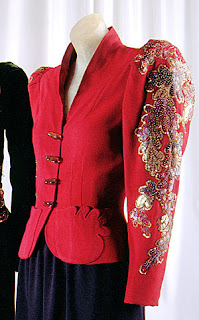
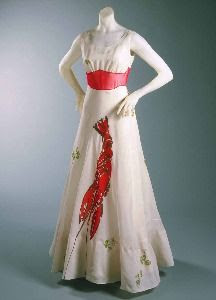
I am off on vacation this weekend, but have to celebrate this week's Heroine--fashion designer Else Schiaparelli, who I love! She was born on this day in either 1890 or 1896 (I found conflicting reports...) Read about her life here and enjoy your weekend!
Sunday, September 04, 2011
Heroine of the Weekend
It's a holiday weekend, and I am supposed to be making appetizers for a cookout tonight but have spent too long reading this morning, so no time for a proper Heroine post! But I do want to celebrate the birthday (September 2, 1838) of Liluokalani, last monarch and only Queen Regnant of Hawaii (I loved touring the royal palace in Honolulu on a trip to Hawaii and found the history fascinating....) Check out more about her life here...and have a great holiday!
Sunday, August 21, 2011
Heroine of the Weekend
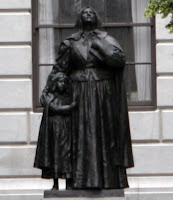
Anne Marbury was born in 1591 in Lincolnshire, England, the daughter of a dissident Puritan clergyman whose family was a follower of John Cotton. In 1634 they went with him to North America and settled in Massachusetts. (Anne had married William Hutchinson in August 1612, and they took their children with them to the New World).
Anne's husband died in 1642, and she moved to Eastchester Bay, which was then part of Dutch New Netherlands. Unfortunately she was caught in a dispute between the Dutch and local Native American tribes and was killed in a native raid in 1643. (One daughter, Susanna, survived, reputedly because of her red hair).
...you have no power over my body, neither can you do me any harme, for I am in the hands of the eternall Jehovah my Saviour, I am at his appointment, the bounds of my habitation are cast in heaven, no further doe I esteeme of any mortal man than creatures in his hand, I feare none but the great Jehovah, which hath foretold me of these things, and I doe verily beleeve that he will deliver me out of our hands, therefore take heed how you proceed against me; for I know that for this you goe about to doe to me, God will ruine you and your posterity, and this whole state.
Some sources on her life:
Robert E. Krieger, Anne Hutchinson: Troubler of the Puritan Zion (1980)
Eve LaPlante, American Jezebel: The Uncommon Life of Anne Hutchinson (2004)
Selma R. Williams, Divine Rebel: The Life of Anne Marbury Hutchinson (1981)
Saturday, July 30, 2011
Heroine of the Weekend
Nannerl, the older sister of Wolfgang, was born in Salzburg, and started learning the harpsichord from her father Leopold when she was about 7, along with her brother. The two of them became a sensation on the European musical tour circuit, visiting cities and royal courts. At first Nannerl was the number one star attraction, but as she got older that changed--"from 1768 onwards she was no longer permitted to show her artistic talent on travels with her brother, as she had reached marriageable age." She still played music in private and for friends, and her brother later wrote a few pieces for her. There is some evidence from his letters that she also composed, but none of her works survive. While he went on more tours she stayed home with her parents.
After her father refused to let her marry her first choice (it seems she was not rebellious at all, unlike her brother!) she married an older, well-to-do magistrate named Johann Sonnenburg, who was already twice widowed and had 5 children. She had three of her own, two daughters (one of whom died in infancy) and a son, who was raised by her father for his first two years. When her husband died in 1801 she returned to Salzburg with her children and taught music. She seems to have lived quietly for the rest of her life, though she did connect with her brother's widow and son later on.
Some sources on her life:
A novel by Alison Bauld, Mozart's Sister (2005)
Maynard Solomon, Mozart: A Life (1995)
Jane Glover, Mozart's Women (2005)
Wednesday, July 20, 2011
Wednesday
Happy Wednesday everyone!
Sunday, July 17, 2011
Blog Tour

No Heroine this weekend (stay tuned next weekend!) but I am on a blog tour with Paula Quinn and Sue-Ellen Welfonder, so be sure and visit me on these sites to comment and win fun stuff!!
July 18:
www.seducedbyabook.com
|
Sunday, July 10, 2011
Heroine of the Weekend
The reason this post will be brief is simply that not much is known about her life beyond the bare facts. In 1823, the year she died, the Edinburgh Review said "She never appeared in public, nor mingled in private society, but kept herself apart." She was born Ann Ward in London, the daughter of a haberdasher, and in 1787 married William Radcliffe, the editor of the English Chronicle, and started writing soon after. The couple had no children, but were said to have a happy marriage. She died on February 7, 1823, probably of asthma.
Most of my info today came from the intro to my copy of Udolpho and from British Authors Before 1800: A Biographical Dictionary (1952, ed. Stanley Kunitz & Howard Haycraft)
Sunday, June 12, 2011
Heroine of the Weekend
Cameron was born in Calcutta, to a father who was an official in the British East India Company and a mother who was a beautiful French aristocrat (Julia was considered a bit of an "ugly ducking" with her mother and sisters!). She was educated in France, but then returned to India in 1838 to marry Charles Hay Cameron, who was 20 years her senior. 10 years later they moved to London, where her sister hosted a well-known artistic salon at her home Little Holland House, enabling Julia to meet many luminaries of the day (including Tennyson--she was soon his neighbor on the Isle of Wight).
She came to photography later in life, when her daughter gave her a camera in 1863, but took to the art very quickly. Within just a year she was a member of the Photographic Societies of London and Scotland and photographing her famous friends (such as Darwin, Browning, Tennyson, Millais, and the actress Ellen Terry) as well as her family. Her favored subjects were portraits and allegorical scenes in a Pre-Raphaelite style. She was a meticulous perfectionist who sometimes took hours to get a scene just right. She also registered her works with the copyright office and kept records of them all, which ensured many survived.
In 1875 she and her husband moved to Ceylon, where it was hard for her to find the necessary chemicals for her work. She died there in 1879. She once wrote, "I longed to arrest all the beauty that came before me and at length the longing has been satisfied."
Some sources on her life and work:
Joanne Lukitsh, Julia Margaret Cameron (2001)
Julian Cos and Colin Ford, Julia Margaret Cameron: The Complete Photographs (2003)