Monday, September 30, 2013

Elizabethan Week, Day One: Hottie Tudor Monday

To celebrate the release of my first Elizabethan Mystery this week, Murder at Hatfield House, we are going to look at some fun Tudor history this week!  And we're starting out with something very fun indeed.  I used to do a feature here called Hottie Monday, so I thought we could take a look at some of the hotties of the Tudor age, and see which one we like best....

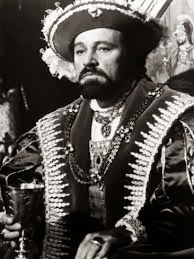
First up: the big daddy of them all, Henry VIII!

The original....


Jonathan Rhys Meyers (Henry as hipster?)

Ray Winstone (Henry as Cockney thug?)


Keith Mitchell


Charles Laughton (Henry as Ren faire turkey leg eater?)


Richard Burton


Robert Dudley, Earl of Leicester!

 Jeremy Irons


 Joseph Fiennes


 Tom Hardy


 Robert Hardy


The Original

And his stepson, Robert Deveruex, Earl of Essex!

 Hugh Dancy


 Robin Ellis (aka Poldark)


Erroll Flynn


The Original

Hans Matheson

Walter Raleigh...

 Clive Owen


 Vincent Price (!!!)


The original...


And a couple of one-offs....

 Kevin McKidd as the Duke of Norfolk


Henry Cavill as Charles Brandon, Duke of Suffolk (my personal favorite!)


So, time to vote!  Which is your favorite of the Tudor hotties???

The schedule for the rest of the week:
Tuesday: favorite film Elizabeths
Wednesday: Tudor castles
Thursday: a closer look at historical secondary characters
Friday: fun research facts I've uncovered
Saturday: Heroine of the Weekend

Sunday, September 29, 2013

Elizabethan Week!

To celebrate the release of my first Elizabethan mystery this week, Murder at Hatfield House, we are going to have posts all week celebrating the wonderful Elizabethan period, with looks at favorite film Elizabeths, favorite castles, non-fiction books, etc.  Stay tuned!!!

Friday, September 27, 2013

Friday Fantasy Real Estate

I'm still working on an Italian Renaissance WIP, so this week we are going back to Italy for our real estate!  Last week we got our country place in Tuscany, today we get our city place.  A 2-bedroom, 15th century apartment in Venice, right off the Grand Canal.  A steal at 1.5 euro!!!  (please note--my Fantasy Real Estate also comes with Fantasy Restoration Budget, so a place on a Venetian canal is totally OK...).  I love that chandelier.  Couldn't we have some great masked balls there??


Saturday, September 21, 2013

Heroine of the Weekend: Francesca Caccini

To get back to our Heroine of the Weekend posts (where I get to take a look at some well-known and less well-known women in history who I admire in one way or another!) we're going to turn to Baroque Florence and meet composer/singer/musician/teacher Francesca Caccini, called "La Cecchina," who was born September 18, 1587!  Her opera, La liberazione di Ruggiero, is generally considered to be the first opera composed by a woman...

Caccini's musical career was no surprise.  Her father, Guilio, was a musician, and her mother Lucia (who died when Francesca was quite young) was a singer, as was her stepmother Margherita and her brother and sister.  She was well-educated, not only in music, but in languages (including Greek and Latin), math, and philosophy.  It prepared her for a life at court.  Her first appearance in public was in France in 1600, at the marriage of Henri IV and Marie de Medici (Francesca's father composed some of the music for the occasion).  King Henri declared her to be "the best singer in all of France!" and tried to get her to stay in his service, but she returned to Florence and built a career serving the Medici.  She worked there as a chamber singer, composer of works for special occasions, and teacher.  By 1614, she was the most highly paid musician at court.  La liberazione...was composed for the visit of Polish prince Ladislaus in 1626 (he liked it so much he had it performed in Warsaw 2 years later!)

She was very well-known throughout Europe, and admired by other musicians.  Monteverdi wrote in 1610, "I heard, in Florence, the daughter of GR sing very well and play the lute, the guitar, and the harpsichord."

She married a fellow musician Giovanni Signori in 1614, and had one daughter with him, Margherita, in 1622.  After his death in 1626, she married nobleman Tommaso Raffaeli and moved with him to Lucchese, mostly retiring from her musical career.  They had one son, but he died in 1630 and she returned to Florence to teach the Medici princesses and perform at smaller occasions.  She left their court in 1641 and was soon lost to public record (it's thought she died sometime before 1645).

Sadly, most of her work is now lost, except for the opera and a few works from her famous cycle of 36 songs in various styles (laments, sacred hymns, love songs, dances).

For more info on her life:
--Kelley Harness, Echoes of Women's Voices: Music, Art, and Female Patronage in Early Modern Florence (2006)
--Carolyn Raney, "Francesca Caccini" in The New Grove Dictionary of Music and Musicians (1980)
--Suzanne G. Cusick, Francesca Caccini at the Medici Court (2009)


For more in-depth info on her music, the Bright Cecilia site has some good stuff...


Friday, September 20, 2013

Fantasy Real Estate Buy Friday

This week I've been working on an Italian Renaissance story, so where else would I look for my next Fantasy Real Estate buy?  Italy, of course!  The Villa Poggio, built in the 15th century but completely restored, 14 bedrooms, a pool, olive groves and vineyards, minutes from Florence.  Only 18 million euros!!!


Giveaway time!!

So Murder at Hatfield House is a Goodreads giveaway for a week!  Enter for the chance to win a copy. :)

Monday, September 16, 2013

Monday

To brighten up my Monday lunch break--a prince, a baby, and a dog!!  How can you get better than that??  here we have Princess Estelle of Sweden, the most stylin' toddler out there, and her hunky uncle Prince Carl Philip at her grandfather's Jubilee.  Enjoy, and happy Monday1


Friday, September 13, 2013

Friday Fantasy Real Estate

One of my favorite things to do when doing Very Important Research online (aka not getting my daily word count done) is look at real estate listings for places I love.  England, Paris, Hawaii, NYC, wherever.  So I decided to share some of my favorite finds here!  Up today: Church Farm, a 16the century Grade II listed property in Shropshire.  5 bedrooms--enough to hold writing retreats!  What do you think??

Nestling near the church in the picturesque village of More, Church Farm is a substantial Grade II listed village house dating back to the mid 16th century. The principal rooms retain many period features including flagstone floors, beamed ceilings, fireplaces, wooden windows with window seats and original doors. The kitchen is light and airy and includes an Aga with fitted cupboards, integrated dishwasher and marble work surfaces. A pantry and a larder are close at hand.

Upstairs there are 5 bedrooms and two bathrooms which are full of character and are versatile in terms of configuration. There are oak floors throughout with old fireplaces in two of the bedrooms.


http://www.countrylife.co.uk/property/uk/properties/3543774/sales

Tuesday, September 10, 2013

Catching Up

So I have once again been a bad, bad blogger. :(  But I miss having a place to talk about all my nerd-girl passions (books, history, clothes!), so am going to start my Heroine of the Weekend posts again this weekend, with a few posts here and there about other things.  I'm also starting up a new blog about all things Tudor at my new Amanda Carmack site (yay!) to celebrate the launch of my new Elizabethan mystery series.  Stay tuned!!!

Sunday, July 14, 2013

Cover Fun!

So I got a new box of books this week!  I do love it when I open those boxes and see the nice, shiny piles of real, live books and see all that hard work pay off.  I also really love the cover on this one.  Harlequin says the inspiration comes from this Les Mis poster--what do you think??


The Runaway Countess, Book One of The Bancrofts of Barton Park, is out in September!  You can pre-order it here at Amazon now... (if you'd like an advance copy for review let me know)

And if you are going to be at RWA next week, look for me there!  I will probably be in the bar....

Saturday, May 25, 2013

Cover reveal!

It's new cover time!!  I always have a suspenseful moment just before opening a new cover file (will I hate it??  will it be hideous??), and I love this one.  "The Runaway Countess" (my first attempt at a "marriage in trouble" storyline) is out in September...

Wed to wickedness 

In Society's eyes, Hayden Fitzwalter, Earl of Ramsay and Jane Bancroft have the perfect marriage. But what can't be seen are the secrets hidden behind closed doors. Believing Hayden will never renounce his dissolute ways, Jane flees to her family's dilapidated estate in the country.

Years later, Hayden now longs to win back the only woman who has ever touched his heart. But first he has to convince her that this rogue is ready to be tamed….

BANCROFTS OF BARTON PARK 
Two sisters, two scandals, two sizzling love affairs

Pre-order from Amazon....


Sunday, May 12, 2013

HOTW: Juliette Recamier

Today we'll take a look at the great French society leader, salonier, beauty, and patron of arts (not to mention cover subject for many a historical novel!), Juliette Recamier, who died May 11, 1849.

She was born Jeanette-Francoise Julie Adelaide Bernard to royal notary Jean Bernard and his beautiful wife Marie Julie in Lyon, where she was educated at the Convent de la Deserte before the family moved to Paris.  The family's fortunes went down during the Revolution, and she was married at the age of 15 to wealthy banker and family friend Jacques-Rose Recamier (the rumor had it that he had an affair with her mother and Juliette was his natural daughter, but this was never proven...).  Recamier himself said "I am not in love with her, but I feel for her a genuine and tender attachment which convinces me that this interesting creature will be a partner who will ensure the happiness of my whole life and, judging by my own desire to ensure her happiness, of which I can see she is absolutely convinced, I have no doubt that the benefit will be reciprocal .... She possesses germs of virtue and principle such as are seldom seen so highly developed at so early an age ; she is tender-hearted, affectionate, charitable and kind, beloved in her home-circle and by all who know her"

The marriage was never consumated, but Juliette kept herself busy with a popular salon that was crowded with artistic and political stars of the day.  Her health was never very good, so she often reclined on the low sofa now called a "recamier" in her honor, but that didn't stop the conversation.  She had a long romance with Francois-Rene Chateaubriand, the writer, politician, and historian often considered to be the founder of French literary Romanticism.  She had other admirers, including the duc de Montmorency, Lucien Bonaparte, Prince Augustus of Prussia, and the baron de Barante.

But one person who didn't admire her was Napoleon, especially considering her friendship with Germaine de Stael and her refusal to be a lady-in-waiting to Empress Josephine.  She was exiled from Paris, traveling to rome and Naples, and to stay with Madame de Stael in Switzerland (where they came up with a scheme for her to divorce in order to marry Prince Augustus, but it never worked out).  Sadly, she lost much of her fortune late in life, but still carried on her famous salon from her apartment at the convent of L'Abbaye-aux-Bois, until she died of cholera in 1849 and was buried in Montmarte.

Her style is still influential, especially to those of us who love the Regency period!  Everyone knows her image, even those who don't know who she was...

A few sources for her eventful life:
Eduoard Herriot, Madame Recamier (1906)
H. Noel Williams, Madame Recamier and her Friends (1901)
Stephane Paccoud, Juliette Recamier: Muse et mecene (2009)

Tuesday, May 07, 2013

Book Signing Info

If you're in the Oklahoma City area, I'm going to be doing a signing at Full Circle books with 7 other fabulous authors this Saturday (May 11) from 3 to 5...come and say hi :)

http://www.fullcirclebooks.com/events.aspx

Sunday, April 21, 2013

HOTW: Eleanora Duse

For this weekend's heroine, we're going to take a quick look at Italian actress Eleanora Duse, who died on April 21, 1924, and was known in her time as a great innovator in the theater (and whose style is still very influential!)

Duse was born in Lombary October 3, 1858, and was literally an actor all her life--her father and grandfather had a troupe, and she started appearing regularly onstage from the age of 4.  As she grew older, she toured Europe, South America, the US, and Russia, gathering fame wherever she went as well as reputation for a naturalistic style (which she called "elimination of the self," a disappearing into a role).  She became best-known for her roles in plays by Ibsen and d'Annunzio.

As well as a very busy life onstage, she had a turbulent love life.  After an affair with journalist Martino Cafiero, which ended after a stillborn child followed soon after by Cafiero's own death, she married actor Teobaldo Checchi in 1881 (they had one daughter, but the marriage ended in divorce when Duse fell in love with another actor, Flavio Ando).  After Ando, there was poet (and Verdi librettist) Arrigo Boito.  Around the same time she started her own troupe, which added management responsibility onto her acting and made her already poor health worse.  Her affair with playwright Gabriele d'Annunzio (which was both professional and romantic) ended when he gave the lead role in his new play La Citta more to her great rival Sarah Bernhardt.  (Unlike Bernhardt, who was flamboyant and loved attention, Duse was very private and low-key, both in her life and her acting style.  She said, "If I had my will, I would live in a ship on the sea and never come nearer to humanity than that!"  Among others, Shaw and Chekov preferred Duse).  Later in life she had affairs with women, including Italian suffragist Lina Poletti, and possibly Isadora Duncan)

On a US tour in 1896, Duse was received by President and Mrs. Cleveland (who caused a scandal by inviting a--gasp!--actress to tea at the White House).  She was painted by Sargent, and the first woman on the cover of Time, among other successes.  She retired in 1909 (though she did give a few performances in 1921), and became known as a great mentor to younger performers and writers (including Martha Graham).  She said the meaning of life and art was "To help, to continually help and share, that is the sum of all knowledge; that is the meaning of art."

She suffered from bad health all her life, made worse by constant touring, and died in Pittsburgh on a US tour in 1924.  Her body lay in state for a few days in New York City before being sent back to her home in Asolo, where she was buried in the cemetery of Sant'Anna, which is still a pilgrimage site for theater lovers.

A couple sources on her fascinating life:
William Weaver, Duse: A Biography (1984)
Helen Sheehy, Eleanora Duse: a biography (2003)

Monday, April 15, 2013

Spring Cleaning!

This weekend I started a much-needed clean-out of my garage, and found boxes and boxes full of back copies of my books which need new homes!  So in the next few weeks I am doing a series of giveaways, starting today with book one of my "Scandalous St. Claires" series, One Naughty Night.  I will give away ten copies to the first ten people to leave their contact info in comments....

(And if you like it and leave a review on Amazon, I will also send you a copy of Two Scandalous Secrets!)

(Also, if you know where I could send some foreign language copies, let me know...)

One Naughty Night at Amazon....

Sunday, April 14, 2013

HOTW: Juana of Castile

For this weekend's heroine we're taking a brief look at one of the saddest figures in history, Juana of Castile (Juana La Loca), who died on April 12, 1555...

Juana was born in Toledo on November 6, 1479, the 3rd child (2nd daughter) of Ferdinand of Aragon and Isabella of Castile (whose marriage brought the 2 kingdoms into personal, but not official, union, which would have immense consequences for poor Juana).  She was well-educated, not just in court etiquette, dancing, music, and religious studies, but also in languages, to prepare her for an important marriage.  She was also said to be pretty, with reddish hair, pale skin, and blue eyes (much like her youngest sister Catalina, who would go on to become Catherine of Aragon, queen of England!)  In 1496, she was betrothed to Philip of Burgundy (Philip the Handsome), son of Maximilian I, Holy Roman Emperor, and Duchess Mary of Burgundy (not really the greatest of marriages at first, since she was just a duchess and not a queen like her sisters, but with potential).  The proxy marriage took place in August, and she set out on a long journey to Flanders, where the official wedding took place on October 20.  She had 6 children, 2 emperors and 4 queens, but the marriage was an infamously bad one, passionate but stormy and unhappy, marred by her husband's blatant infidelities and his abusive treatment of her.

An unexpected series of deaths in her birth family (her brother Juan and his posthumous stillborn child, followed by her older sister Isabella and her son) left Juana the heir to Castile after her mother, and Aragon as well.  In 1502, she and her husband traveled back to Spain where she was named Princess of Asturias (the official title of the heir), and where she stayed to give birth to her latest child when Philip went back to Flanders.  She was torn between her birth family, especially her mother (who was astute enough to be very concerned about her daughter's health and terrible marriage) and her husband, but eventually returned to Philip.  Isabella died in 1504, leaving Juana Queen of Castile--and leaving Ferdinand very unhappy to have lost half his power, and to a mere daughter at that!  He remarried to try and have another male heir, which did not work out, and started plotting against his daughter.  (He lost his monarchical status in Castile although his wife's will permitted him to govern in Joanna's absence or, if Joanna was unwilling to rule herself, until Joanna's heir reached the age of 20, but this wasn't good enough for him).  He persuaded the Cortes that Joanna's "illness is such that the said Queen Doña Joanna our Lady cannot govern". The Cortes then appointed Ferdinand as Joanna's guardian and the kingdom's administrator and governor.

Philip was also not happy about this, not wanting to give up any power to his father-in-law.  The couple left for Spain in January 1506, but storms sent them to England, where Juana got to see her sister Catherine one more time.  They didn't arrive in Spain until April, when civil war was looming in Castile. Philip apparently considered landing in Andalusia and summoning the nobles to take up arms against Ferdinand in Aragon. Instead, he and Joanna landed at on 26 April and the Castilian nobility abandoned Ferdinand. Ferdinand met Philip on 20 June 1506 and handed over the government of Castile to his "most beloved children", promising to retire to Aragon. Philip and Ferdinand then signed a second treaty, agreeing that Joanna's mental instability made her incapable of ruling and promising to exclude her from government. Ferdinand then proceeded to repudiate the agreement the same afternoon, declaring that Joanna should never be deprived of her rights as Queen Proprietress of Castile. A fortnight later, having come to no fresh agreement with Philip and thus effectively retaining his right to interfere if he considered his daughter's rights to have been infringed upon, he abandoned Castile for Aragon, leaving Philip to govern in Joanna's stead.

This didn't last very long.  Philip died on Sept. 25, 1506 of typhoid (though there were rumors of poison), and Juana's attempts to rule on her own at a time of famine, plague, low funds, and public unrest, ended in disaster.  Her father was named administrator of Castile in 1510 (though Juana was always considered queen regnant, she had no official powers), and he confined her to the convent of Santa Clara in Tordesillas (which was the sight of some of the most dramatic tales of her life--it was said she carried her husband's coffin there with her, sometimes stopping to open it and take a look at him).  At the convent she was allowed to have her youngest daughter with her, but was closely confined and looked after by a staff appointed by her father, who reported to him.

After her father's death in 1516, her oldest son, 17-year-old Charles (eventually Charles V, Holy Roman Emperor) took over the ruling of Castile and Aragon, and kept his mother just as closely confined.  (He wrote to the convent, Charles wrote to the Convent of Santa Clara caretakers: "It seems to me that the best and most suitable thing for you to do is to make sure that no person speaks with Her Majesty, for no good could come from it").  There was a brief possibility of revolt, which came to nothing, and her condition deteriorated.  She died at age 75 and was buried in the Royal Chapel at Granada with her parents and husband.

It's now thought she suffered from clinical depression (exacerbated by an unhappy marriage and long years of unwilling imprisonment) and possibly schizophrenia, inherited from her maternal grandmother Isabella of Portugal, who also spent years suffering under severe mental illness.

A couple of interesting sources on Juana's sad life (she also features in many novels and a recent movie, Mad Love):
Maria Gomez, Juana of Castile: History and Myth of the Mad Queen (2008)
Julia Fox, Sister Queens: The Noble, Tragic Lives of Catherine of Aragon and Juana Queen of Castile (2012)

Sunday, March 24, 2013

Heroine of the Weekend

I'm re-starting my Heroine of the Weekend posts with a look at Queen Victoria's most unconventional daughter, Princess Louise, Duchess of Argyll, who was born March 18, 1848!  As well as being the most beautiful of the princesses, she was a talented artist and sculptor as well as a supporter of the suffragist movement and women's rights.

Princess Louise Caroline Alberta was born at Buckingham Palace, the 6th child and 4th daughter of Queen Victoria and Prince Albert, in the middle of a year of revolutionary upheaval in Europe, which led her mother to say Louise would surely turn out to be "something peculiar".  She was always lively and vivacious--her family nickname was "Little Miss Why," and her artistic talent was recognized early on.  She was even allowed to attend classes at the National Art Training School in South Kensington, and even though as a royal she could never be a professional she later sculpted many memorials, among them a memorial to the Boer War and one for her brother-in-law Prince Henry of Battenberg, as well as a famous sculpture of her mother now at Kensington Gardens.

Her liveliness was strained after the death of her father in 1861, when the royal court went into prolonged mourning.  She wasn't allowed a debutante ball, as her older sisters had, and she was bored and dissatisfied.  She served for a time as her mother's personal secretary, writing letters and attending to duties Victoria was unable to.  Her mother, who had sometimes despaired of her pretty, energetic daughter, said, "She is (and who would some years ago have thought it?) a clever dear girl with a fine strong character, unselfish and affectionate."

After an unsuitable attachment to her brother's tutor, a clergyman who late became Canon of Westminster Abbey, and proposed marriages to the Crown Prince of Denmark, Prince Albert of Prussia, and William, Prince of Orange (all shot down by her mother!), Louise decided she wanted to break with tradition and marry a British subject, John, Marquess of Lorne, heir to the Duke of Argyll.  Her brother, the Prince of wales, objected, but Queen Victoria liked the idea of "new blood," writing to her son:

"That which you object to [that Louise should marry a subject] I feel certain will be for Louise's happiness and for the peace and quiet of the family ... Times have changed; great foreign alliances are looked on as causes of trouble and anxiety, and are of no good. What could be more painful than the position in which our family were placed during the wars with Denmark, and between Prussia and Austria? ... You may not be aware, as I am, with what dislike the marriages of Princesses of the Royal Family with small German Princes (German beggars as they most insultingly were called) ... As to position, I see no difficulty whatever; Louise remains what she is, and her husband keeps his rank ... only being treated in the family as a relation when we are together .. "

Louise and Lorne were married on March 21, 1871 at St. George's Chapel, Windsor, where she wore a lace veil of her own design.  The couple had no children, and though happy at first were later estranged.  Lorne was the only royal son-in-law with his own political career, and in 1878 was made Governor General of Canada.  Louise was homesick in Ottawa, appalled at the "rough" accomodations at Rideau Hall.  But she redecorated, became a social sensation in Canada, enjoyed the outdoors activities like skating and sleighing, and was patron of several charities as well as founder of the Royal Canadian Academy of Arts.  After a serious sleigh accident on February 14, 1880, her health was never quite the same, and she spent more and more time in England, apart from her husband.  Lorne returned to England in 1883, where his hopes of growing a larger political career were frustrated and the marriage grew more remote.

Louise moved into the apartment at Kensington Palace where she lived for the rest of her life, and became preoccupied with her own artistic work, as well as family quarrels (especially with her sister Beatrice, who thought Louise was too close to her own husband, the handsome Prince Henry of Battenberg).  She became obsessed with physical fitness and diet (her family made fun of her for it, but she lived longer--and looked better--than any of them!).  She also became interested in women's suffrage, and made a point to patronize female physicians.

Her husband was in failing health and declining finances from 1911, and she was reconciled to him and nursed him until his death in 1914.  After World War I she mostly retired, except for some charity work. and lived at Kensington next door to her reconciled sister Beatrice.  She died Dec. 3, 1939, and was the first royal to be cremated.  Her ashes were first deposited at the Royal Crypt at St. George's, but were then moved to Frogmore with her siblings and parents.  Her sculptures can still be seen in London, a monument to a princess who lived her own life within the strict restraints of her birth and times.

For more info, Jehanne Wake has a great biography of the princess, Princess Louise: Queen Victoria's Unconventional Daughter (1988)

Sunday, March 10, 2013

New Heroines!

So it's been MUCH too long since I posted on this blog, and I have been missing it!  Especially my Heroine of the Weekend posts.  So I have decided to once again start choosing an interesting historical woman to feature each weekend--and maybe once in a while have another post as well.  I just need a little help getting back into the swing of blogging things.  I've started by freshening things up here, posting pics of my latest releases, etc etc.  But who would you like to see featured in the next few weeks???  (for an idea of the kinds of Heroine posts I do, check out the links list of past Heroines...)

Monday, May 28, 2012

Hottie Monday


 What better way to celebrate a holiday weekend than the return of Hottie Monday??  This week's Hottie--Johnny Flynn, English indie musician and actor (he is revisiting his award-winning Viola in Mark Rylance's all-male Twelfth Night, which I wish I could see...)


Sunday, April 15, 2012

Winner!

Thanks to the scary-stormy weekend here in my neck of the woods, I am waaay behin in choosing a winner for my "Rogue" drawing! The winner is....Rosa Alday. Congrats and I hope you enjoy the book...

Thursday, April 05, 2012

Contest!


I have been a BAD blogger! But I am going to start posting here regularly again, and I also received a big box of copies of my May release, The Taming of the Rogue. So to celebrate--contest! Just send me an email to amccabe7551 AT yahoo.com and tell me what you love about the Elizabethan period (or about this gorgeous cover!). I will run the contest over the weekend and have a winner by next Tuesday...
(You can also read more about this book on my website...)

Sunday, January 15, 2012

Heroine of the Weekend

Since today is my birthday, it seemed like a good time to get organized and start doing some blog posts again!! I'm going to start by adding in some new Heroines, since I have missed them. Today's Heroine is Bertha Morisot, born on January 14, 1841.

Morisot was born in Bourges, to a well-to-do and respectable family who nevertheless encouraged their daughters Berthe and Edma in their pursuit of art. (Edma married young and gave up painting, while Berthe was more ambitious). Berthe first studied with Barbizon School artist Camilly Corot, who encouraged her interest in plein-air landscape painting, and later with Edouard Manet, who became one of her greatest friends and colleagues and who used her as his model many times (there are rumors of romance, but no proof has come to light...)

Her first appearance in the prestigious Salon was in 1864, with 2 landscapes. She continued to show at the Salon, to mostly positive reactions, until she joined up with the rebellious Inpressionists in 1873. Her light, free style fit well with their aesthetic, though like the other female Impressionist Mary Cassat she mostly painted images of her own milieu of intimate domestic life, women in their homes, and landscapes.

In 1874 she married Edouard Manet's brother Eugene and had one daughter, Julie. She died of pneumonia on March 2, 1895 and was buried in the Cimetiere de Passy. Her paintings can still be seen in every major museum in the world and are highly sought-after in art auctions...

Some sources on her life:

Anne Higonnet, Berthe Morisot (1995)
Julie Manet, Growing Up With the Impressionists: The Diary of Julie Manet (1987)

Wednesday, October 26, 2011

Hiatus And New Book

Am on a short hiatus here while I finish some deadlines! But in the meantime check out my new November "Undone!" short story--just in time for the holidays